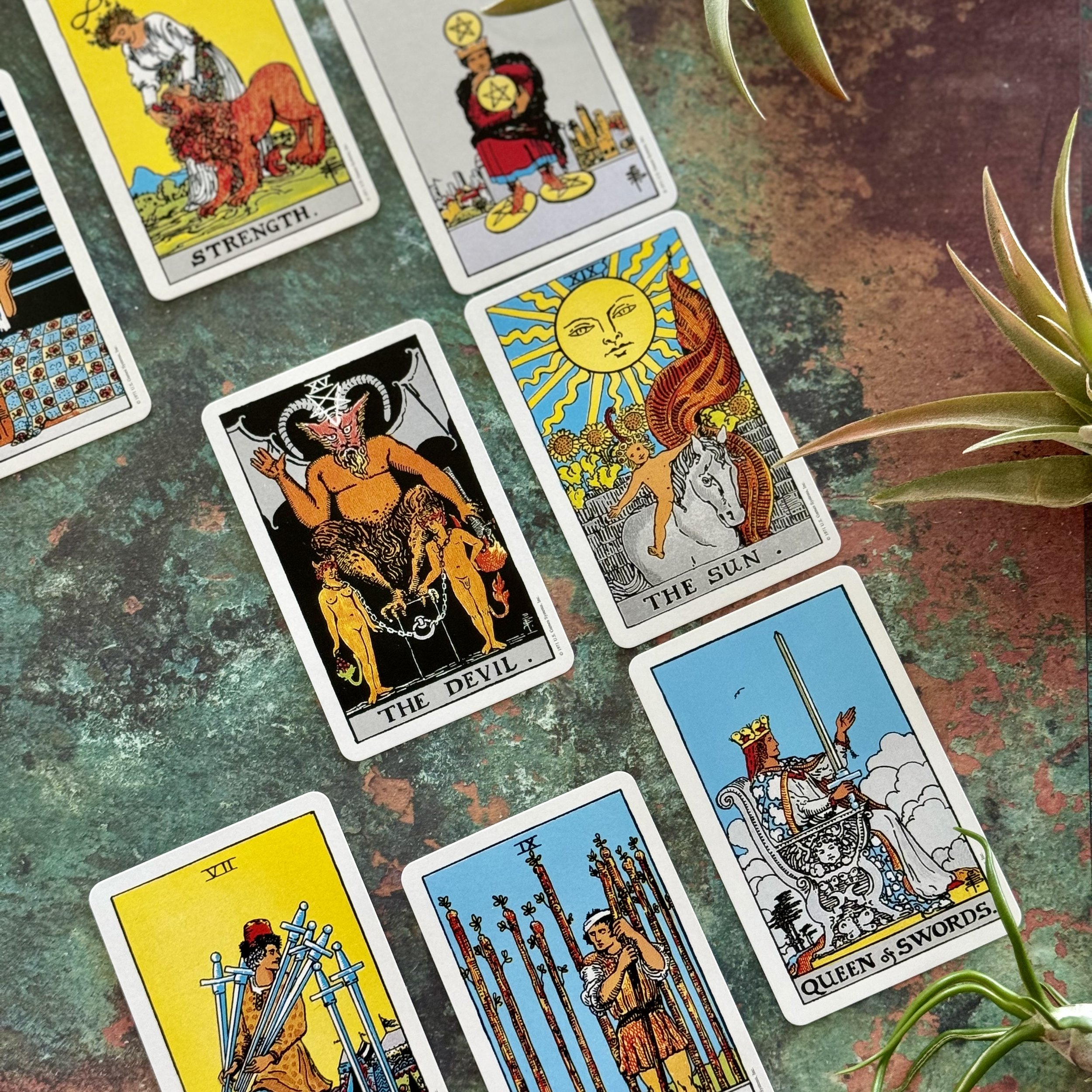
Tarot reading is a form of cartomancy that uses a deck of 78 symbolic cards to gain insight into the past, present, and potential future. It’s often used as a tool for self-reflection, guidance, and personal growth, rather than a definitive prediction of the future.
Here’s a breakdown of what Tarot reading is and how it generally works:
The Tarot Deck:
A standard tarot deck consists of 78 cards, divided into two main groups:
- Major Arcana (22 cards): These cards represent major life themes, significant events, archetypal energies, and spiritual lessons. They depict a “Fool’s Journey” through various life stages and experiences, such as The Fool, The Magician, The Empress, Death, The Tower, The Star, The World, etc. When a Major Arcana card appears in a reading, it often signifies a profound and impactful message.
- Minor Arcana (56 cards): These cards reflect more everyday experiences, challenges, and practical aspects of life. They are divided into four suits, similar to a regular playing card deck, but with different symbolic associations:
- Wands (Fire): Represents creativity, passion, action, ambition, and willpower.
- Cups (Water): Symbolizes emotions, relationships, intuition, and feelings.
- Swords (Air): Relates to intellect, thoughts, conflicts, challenges, and truth.
- Pentacles/Coins (Earth): Represents material aspects, money, career, security, and practical matters.
- Each suit has 14 cards: Ace through Ten, and four Court Cards (Page, Knight, Queen, King).
How a Tarot Reading Works:
- Formulating a Question: The process usually begins with the person seeking the reading (the “querent”) formulating a question or identifying an area of their life they’d like guidance on. It’s often advised to ask open-ended questions that focus on self-reflection rather than simple “yes/no” predictions.
- Shuffling and Drawing Cards: The querent or reader shuffles the deck, often while focusing on the question. The cards are then laid out in a specific pattern called a “spread.”
- Tarot Spreads: Spreads are arrangements of cards, where each position in the layout has a particular meaning. Common spreads include:
- One-Card Pull: For a quick daily insight or to answer a simple question.
- Three-Card Spread: Often used for Past-Present-Future, Situation-Action-Outcome, or Mind-Body-Spirit.
- Celtic Cross Spread: A more complex ten-card spread that provides a comprehensive overview of a situation, including influences, obstacles, conscious/unconscious factors, external environment, hopes/fears, and the overall outcome.
- Many other spreads exist for specific areas like relationships, career, decision-making, etc.
- Interpretation: The reader interprets the cards based on:
- Symbolic Meanings: Each card has traditional meanings associated with its imagery and suit.
- Position in the Spread: The meaning of a card is influenced by where it falls in the chosen spread (e.g., a card in the “past” position will be interpreted differently than the same card in the “future” position).
- Upright vs. Reversed: Cards can appear upright or reversed (upside down). A reversed card often indicates a blocked energy, a challenge, an opposite meaning, or an internal focus of the card’s upright meaning.
- Intuition: A crucial element of tarot reading is the reader’s intuition. They connect with the cards’ energies and the querent’s situation to provide a personalized interpretation.
- Storytelling: The reader weaves the individual card meanings into a cohesive narrative that addresses the querent’s question and provides actionable insights.
Benefits of Tarot Reading:
- Self-Reflection and Awareness: Tarot acts as a mirror, helping individuals explore their thoughts, feelings, and motivations.
- Clarity and Perspective: It can offer new viewpoints on challenging situations, helping to identify patterns and potential solutions.
- Guidance in Decision-Making: Tarot doesn’t make decisions for you, but it highlights potential paths and outcomes, empowering you to make informed choices.
- Emotional Healing: It can help process emotions, navigate relationship dynamics, and foster emotional growth.
- Enhancing Intuition: Regular practice with tarot can strengthen one’s own intuitive abilities.
- Empowerment: By gaining insight into their circumstances, individuals can feel more in control of their lives and better equipped to pursue their goals.
It’s important to remember that tarot reading is typically seen as a tool for guidance and self-discovery, providing insights into the energies at play and potential outcomes based on current actions. It empowers individuals to make conscious choices, rather than predicting an unchangeable fate.